
In 2026, many authors bring new findings, practical information on the diagnosis and treatment of conditions related to breast diseases to our journal. Their articles published with us have received very well feedback in the field and stimulate a lot of discussions and new insights among the peers.
Hereby, we would like to highlight some of our outstanding authors who have been making immense efforts in their research fields, with a brief interview of their unique perspectives and insightful views as authors.
Outstanding Authors (2026)
Ruth Mary Parks, The University of Nottingham, UK
Lukas Kure-Rosenberg, Zealand University Hospital, Denmark
Outstanding Author
Ruth Mary Parks
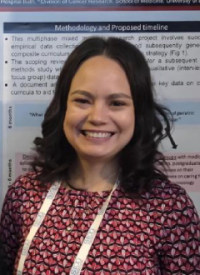
Dr. Ruth Mary Parks is an Associate Professor in Breast Surgery at the University of Nottingham. She carries out her clinical work as a Breast Surgeon at the University Hospitals of Derby and Burton NHS Trust. She achieved her primary medical degree from the University of Nottingham in 2013 and undertook her surgical training in the East Midlands. She achieved her Certificate of Completion of Training in General Surgery with a subspeciality of Breast Surgery in July 2025. She completed her PhD at the Nottingham Breast Cancer Research Centre in 2022 in the field of tumour biology in older women with breast cancer. She has also completed an MSc in Surgical Sciences from the University of Edinburgh. Her research interests include tumour biology, surgery, and geriatric oncology.
Dr. Parks asserts that all healthcare professionals should engage in academia throughout their careers and stay up to date with the latest evidence. The evidence base for management of breast cancer is rapidly growing and expanding, which is great news for the patients that we treat. Academic writing enables the delivery of this information to healthcare professionals, scientists, and other colleagues in the field.
Dr. Parks has always had a passion for writing, even before she began her medical degree. She enjoys seeing a project evolve from a few bullet-point ideas on a page into a completed manuscript. Additionally, she takes pleasure in mentoring junior colleagues and those who are less familiar with academic writing, helping them to produce their own work.
“I work as part of a group which consists of multiple members of the multi-disciplinary team, including surgeons, oncologists, geriatricians, breast care nurses, patients and advocates, other allied healthcare professionals, scientists, epidemiologists, bioinformaticians, and many more. I also work with colleagues from across the UK, Europe, and worldwide, through collaborations, for example, such as with the International Society of Geriatric Oncology. This ensures that as a researcher, I am up-to-date with practices worldwide, using a team approach and using these collaborations to enrich my research ideas and projects,” says Dr. Parks.
(by Sasa Zhu, Brad Li)
Lukas Kure-Rosenberg
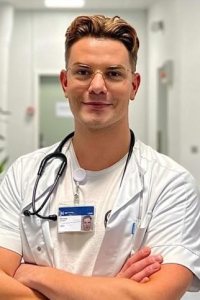
Dr. Lukas Kure-Rosenberg is a medical doctor affiliated with the Department of Plastic and Breast Surgery at Zealand University Hospital in Roskilde, Denmark, and currently a PhD fellow in collaboration with the University of Copenhagen and Region Zealand. His research focuses on patient-reported outcomes, quality of life, and decision-making in breast cancer surgery, particularly among older women undergoing breast-conserving treatment. His current work combines prospective BREAST-Q data with clinical and national registry analyses to better understand long-term patient satisfaction, expectations, survivorship, and the potential need for reconstructive or corrective interventions after breast cancer treatment. By integrating patient-reported outcomes with population-level survival and treatment data, the aim is to contribute to a more comprehensive understanding of this patient population from both clinical and epidemiological perspectives.
To Dr. Kure-Rosenberg, a good academic paper answers a clinically meaningful question with intellectual honesty and methodological transparency. Even complex research should ultimately help clinicians think more clearly or improve patient care. He also values papers that acknowledge uncertainty rather than oversell their conclusions. In clinical research, reality is often more nuanced than the abstract suggests, and he thinks readers appreciate authors who openly discuss limitations. Finally, good papers are memorable because they communicate clearly. Strong methodology is essential, but if the message is hard to follow, important findings risk being overlooked. Some of the best mentors he has worked with, including Professor Nicco Krezdorn, have emphasized that scientific writing should aim not only to inform but also to keep readers engaged.
Dr. Kure-Rosenberg thinks that bias can never be completely eliminated. Researchers are often emotionally invested in their hypotheses and projects. Being aware of that tendency is important. For him, avoiding bias starts with study design, not just with writing. Clear endpoints, predefined analyses, and transparent reporting reduce the risk of unconsciously shaping the narrative afterward. Discussions with collaborators from different backgrounds are also extremely valuable, especially when they challenge your interpretation of the data. In writing, he tries to present findings proportionally and avoids making claims stronger than the data support. Negative or unexpected findings are often just as interesting as positive ones. Good scientific writing should invite reflection rather than simply confirm the author’s expectations.
In Dr. Kure-Rosenberg’s view, research can sometimes feel slow and uncertain, especially in clinical medicine, where meaningful projects often take years to complete. He thinks it is important to remember that even small contributions can become valuable pieces of a much greater collective effort. Young researchers should not be discouraged by rejection, revisions, or critical feedback. Some of the most constructive moments in academia come from difficult questions and thoughtful criticism. He would also encourage researchers to stay clinically curious. Many relevant research questions still arise from everyday patient encounters rather than from databases alone. In the end, scientific progress is rarely driven by a single breakthrough paper but by persistent people who continue asking careful questions over time.
(by Sasa Zhu, Brad Li)